Internet Explorer is not supported. Please use a modern browser like Chrome, Firefox, or Edge to access this app.
- Hair Loss

- Sexual HealthNew
- learn


- Chew+ 5-In-1: Dutasteride & Minoxidil

 New
New - Chew 3-In-1: Finasteride & MinoxidilNew
- Drop+ 11-In-1: Dutasteride & Minoxidil
 New
New - Drop 4-In-1: Finasteride & MinoxidilNew
- Topical Finasteride & Minoxidil

- Finasteride

- Minoxidil Foam/Solution

- Oral Minoxidil
- Minoxidil+ Spray

- Ketoconazole Shampoo

- Thickening Shampoo

- Thickening Conditioner
- Thickening Pomade

- Daily Hair Defense Supplement
- See All Products

- blog
- about us
- FAQ
Hair Loss
Take our hair loss quiz
Get a recommendation tailored for your needs

Explore
Treatments
Sexual Health

Medication Overview
Chew+
Dutasteride 0.2 mg, LDOM 2.5 mg, Biotin 10 mg, Vitamin C 120 mg, Zinc 10 mg
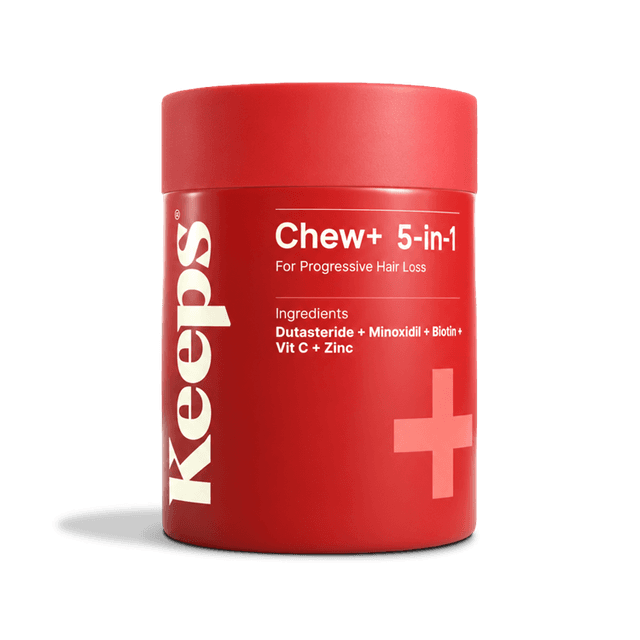
About Chew+
Keeps’ Chew+ contains 2 prescription-strength medications (dutasteride 0.2 mg and LDOM 2.5 mg) that help combat hair loss and 3 supplements that support hair follicle health and function (biotin, vitamin C and zinc).
- Dutasteride works to slow down hair loss and help regrow hair in men dealing with male pattern baldness. While it’s not officially FDA-approved for hair loss in the U.S. (though it is approved in Japan and South Korea), research shows that about 9 out of 10 men see improvement when taking this medication, and some experience significant regrowth. Most people start noticing results around 4 to 6 months after beginning treatment, with hair continuing to improve over time.
- LDOM is an oral form of topical minoxidil which is commonly used to regrow hair. While this medication is not FDA-approved for hair loss, studies have shown that it has been helpful in slowing hair loss and in some cases regrowing hair.
Please note that we do not recommend using topical products containing dutasteride, finasteride or minoxidil when taking Chew+, nor do we recommend taking any additional supplements containing biotin, vitamin C, or zinc.
Instructions
Chew 1 tablet daily. Take with or without food.
Possible Side Effects
Oral dutasteride is generally well-tolerated, with potential side effects affecting only a small percentage of patients. It is important to be mindful of these potential side effects before initiating treatment.
Sexual side effects of dutasteride can include: Decrease in sex drive, trouble getting or keeping an erection, problems with ejaculation or orgasm, testicular pain, or blood in semen
While unlikely, a small subset of patients may also encounter decreased semen volume and reduced sperm count, potentially affecting fertility and complicating conception.
Additional side effects of dutasteride: Depression, anxiety, suicidal thoughts and behavior, allergic reactions including rash, itching, hives and swelling of the lips, tongue, throat, and face, and breast tenderness and enlargement (gynecomastia).
In the majority of cases, these side effects tend to resolve upon discontinuation of the medication. However, there have been rare instances of patients continuing to experience side effects even after stopping the medication, including decrease in sex drive, trouble getting or keeping an erection, problems with ejaculation or orgasm, testicular pain, reduced fertility, gynecomastia, and exacerbation of depression or anxiety symptoms.
Tell your healthcare provider if you have any side effect that bothers you or that does not go away.
Notably, dutasteride is contraindicated in patients with a history of prostate cancer unless they have undergone complete prostate removal. Although dutasteride decreases the overall risk of prostate cancer, some studies suggested a slight increase in the risk of high-grade prostate cancer. However, a subsequent study indicated that this did not translate into a higher mortality rate for these patients.
There have been extremely rare reports of patients developing male breast cancer while taking dutasteride, although no direct, conclusive evidence has been established linking the two.
Individuals with a history of significant liver disease should avoid dutasteride. Additionally, caution is advised when using dutasteride in patients with depression, as it may exacerbate symptoms. Finally, dutasteride is not recommended for use in women or children, and pregnant women should avoid handling crushed or broken dutasteride tablets due to the potential risk of birth defects in male fetuses.
Patients should not donate blood until 6 months after their last dose of dutasteride.
You can find the full list of side effects here.
There are some very rare but serious side effects with LDOM, which include the following: Lightheadedness / dizziness, racing or irregular heart beat, fluid retention, which can lead to swelling in the feet, lower legs, hands and around the eyes, as well as unexplained weight gain, and accumulation of fluid around the heart (pericardial effusion), which can very rarely interfere with heart function. Symptoms include chest, arm or shoulder pain, and shortness of breath.
If you experience any of these side effects, stop use and seek immediate medical attention. If you develop any heart conditions other than high blood pressure, discontinue use and contact us. It’s important to notify your primary care provider and other healthcare providers that you’re on this medicine. Some of the less serious side effects include unwanted facial and / or body hair growth and temporary shedding in the first 1-2 months of use. You can find the full list of side effects here.
VERY IMPORTANT: If you take biotin supplements (Vitamin B7), you should know that they can interfere with certain blood tests and cause incorrect results. This includes important tests like troponin (used to check for heart attacks), thyroid tests, and hormone levels. To get accurate lab results, stop taking biotin at least 48-72 hours before any blood work, and always tell your providers and the lab if you’re taking biotin supplements.

Keep in the loop
Thanks! You've signed up successfully.


